
A significant proportion of small businesses in Adelaide operate without a commercial shopfront. Electricians, mobile detailing operators, plumbing contractors, business advisors, mortgage brokers, and home-based design studios regularly deliver exceptional service across South Australia without ever hosting a client on their personal premises.
For these business owners, local search often creates anxiety. They know their prospective customers are typing phrases like "commercial electrician Adelaide" or "conveyancer near me" into Google. Yet they understandably do not want their private home address, residential street, or front gate broadcast across Google Maps and public business directories.
The good news is that search engines do not require you to sacrifice your personal privacy to compete in local search. Google explicitly supports service-area business models. This guide outlines how local search works for businesses without a public storefront, what Google’s official guidelines actually permit, and how to build authentic local search authority across Greater Adelaide without resorting to risky shortcuts or keyword stuffing.
1. What Local SEO Actually Means
To optimize for local discovery, it helps to understand how Google distinguishes standard organic search from local search intent.
When someone searches for a generic query like "how to clean marble benchtops", Google returns standard organic web listings—ranked primarily by content depth, domain authority, and technical relevance. Location is largely irrelevant to the answer.
However, when a user searches for a query with explicit local intent (such as "emergency plumber Adelaide") or implicit local intent (such as "bookkeeper near me", where Google infers geographic intent from the searcher's mobile device or IP location), the search engine presents a fundamentally different interface: the Google Local Pack (the interactive map featuring three local business listings) alongside localized organic results.
Local SEO is the practice of optimising your overall digital presence—including your business profile, your website code, customer feedback, and local citations—so that search algorithms recognize your business as the most relevant, reliable, and qualified provider within that specific geographic market.
2. Can a Service-Area Business Do Local SEO?
Yes. A common misconception among Australian small business owners is that only businesses with physical storefronts—such as cafes, dental clinics, or retail shops—can rank in local search results. That is factually incorrect.
Google’s official merchant documentation explicitly categorizes businesses into distinct operational models:
- Storefront businesses: Businesses that serve customers at their physical business address (e.g. a retail store on The Parade or a medical clinic on North Terrace). These businesses must display their physical address.
- Service-Area Businesses (SABs): Businesses that visit or deliver to customers directly at their homes or job sites, but do not serve customers at their business address (e.g. mobile trades, home-based consultants, cleaning operators). These businesses must hide their physical address on Google.
- Hybrid businesses: Businesses that serve customers at their physical address but also deliver goods or travel directly to clients. These businesses may display their address and define a service area.
If you operate from home or a private office and travel to your clients, you are a legitimate Service-Area Business. You are fully eligible to appear in local search results and Google Maps without publishing your street number or residential location to the public.
3. Google Business Profile and Address Privacy
Managing your Google Business Profile (GBP) correctly is the foundational step for any Adelaide service-area business. Google’s verification rules require accuracy, but they provide built-in privacy safeguards:
The Verification Requirement
To prevent spam, Google requires a genuine physical location to verify that your business legitimately operates within South Australia. When creating or claiming your profile, you must enter your actual physical address (your residential home address where your business is registered on the Australian Business Register). This address is used solely by Google for verification purposes (via video verification, postcard, or phone authentication).
Hiding Your Street Address
Under your profile's location settings, you must select "No" to the setting asking if you have a location customers can visit. Toggle "Show business address to customers" to OFF. Once configured, Google removes your street address, building number, and postcode from public view. On Google Maps, your listing will display as a verified service area rather than a specific pin drop on your house.
"Google’s guidelines allow you to use your home address for verification while keeping it completely hidden from the public. Never use a virtual office or P.O. Box."
Defining Your Service Areas
Once your address is concealed, Google prompts you to define your service areas. You can specify up to 20 geographic areas. For an Adelaide operator, select sensible, truthful boundaries—such as Adelaide, Greater Adelaide, or specific council areas and regions (e.g. Adelaide Hills, Southern Suburbs, Western Suburbs) where you genuinely travel to deliver service.
The Virtual Office Trap
Many business owners attempt to circumvent the home-address model by renting a virtual office or mailbox in the Adelaide CBD (e.g. on King William Street or Grenfell Street) simply to show a central pin on the map. This directly violates Google’s Guidelines for Representing Your Business.
Google’s official policy states that unless you lease dedicated, permanently signed office space that is physically staffed by your own team members during your stated business hours, virtual office addresses are strictly prohibited. Google’s algorithmic spam filters routinely sweep known co-working facilities and mail drop locations. Using a virtual office address without physical staffing frequently results in immediate, unappealable suspension of your Google Business Profile.
4. What Google Uses to Understand a Local Business
Google’s official business support documentation states that local ranking is determined by three core factors: Relevance, Distance, and Prominence. Understanding how these factors interact helps you prioritize genuine improvements over SEO gimmicks.
| Factor | Official Google Definition | How to Influence It Legitmately |
|---|---|---|
| Relevance | How well a local Business Profile matches what a user is searching for. | Choose precise primary business categories; ensure detailed, accurate descriptions of services on both GBP and your website. |
| Distance | How far each potential search result is from the location term used in a search, or from the searcher's detected location. | Accurately set truthful service boundaries; optimize your website for your primary metropolitan market. (You cannot manipulate physical distance). |
| Prominence | How well-known a business is, based on web information, review count, review scores, and organic search ranking. | Earn consistent positive customer reviews, maintain consistent directory citations, and build high-quality website SEO authority. |
Official Fact vs. Industry Inference: Google officially confirms that your organic search position in standard web results is a direct component of local prominence. A business whose website is technically fast, properly structured, and authoritatively indexed has a distinct structural advantage in local map results over a competitor who treats their Google Business Profile as an isolated silo.
5. Your Website Still Matters
A Google Business Profile is an entry point, not your entire digital presence. When local search algorithms evaluate whether to surface your business in competitive searches, they actively crawl the website URL linked to your profile.
To support your local visibility, your website should fulfill several foundational requirements:
- Dedicated service architecture: Rather than dumping every capability onto a single generic page, create dedicated pages for your core commercial offerings (e.g. residential services, commercial maintenance, specialized consulting). This gives search engines clear semantic topicality to match against specific user queries.
- Local operational context: Include genuine details about your work across South Australia—such as references to South Australian regulatory standards, local trade licensing numbers, and case studies highlighting work delivered in specific Adelaide regions.
- Clear contact avenues: Make your phone number, contact email, and operational service hours prominent and identical to your Google Business Profile.
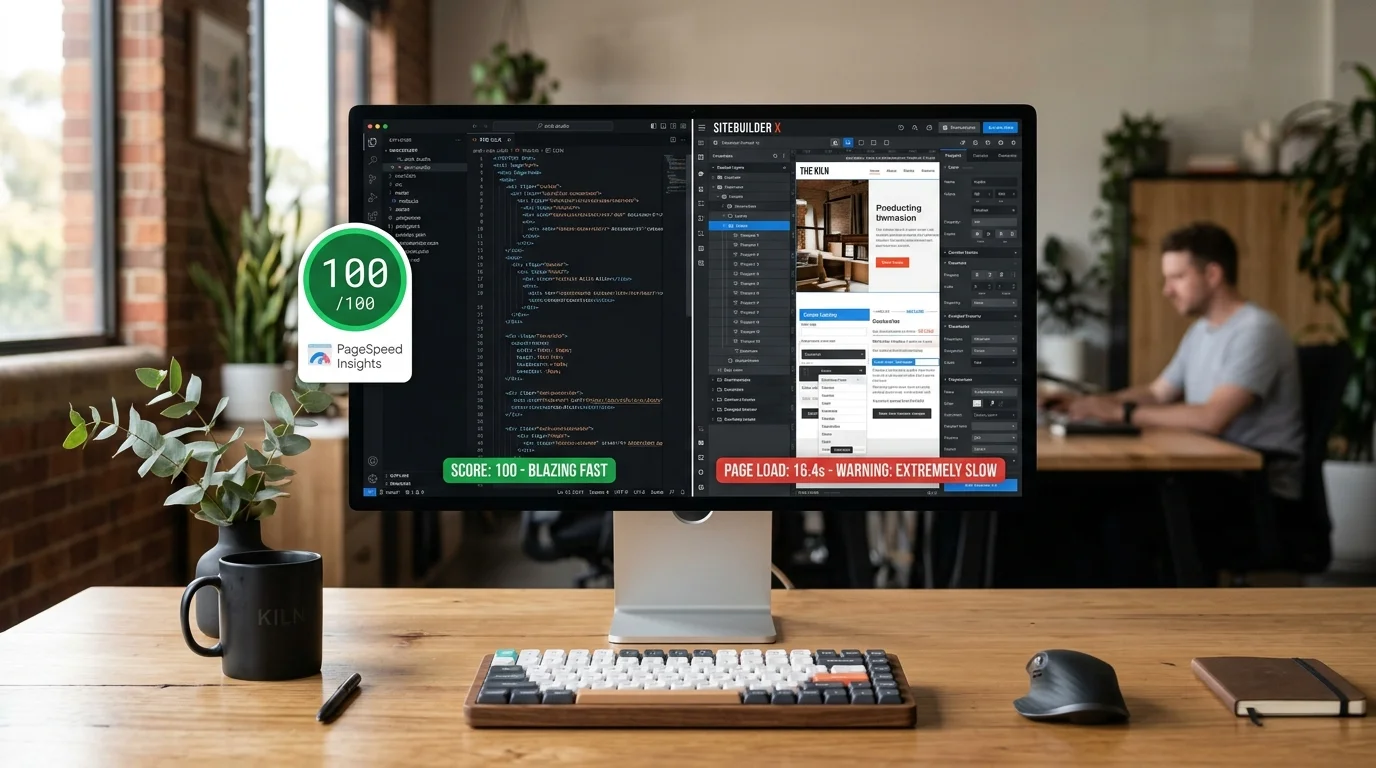
- Technical crawlability and speed: Fast, clean code ensures search bots can render your site effortlessly and mobile visitors do not bounce. If your site takes longer than three seconds to load on a mobile device, potential local leads leave before making contact. For troubleshooting indexation roadblocks, see our guide on why websites fail to show on Google.
6. Structured Data for Service-Area Businesses
Structured data (JSON-LD schema markup) is machine-readable code that helps search engines understand your entity relationships without ambiguity. For a service-area business, your schema must mirror your privacy settings.
Do NOT publish schema containing a private street address if that address is hidden on your Google profile. Instead, use Schema.org’s LocalBusiness or ProfessionalService vocabulary with the areaServed property:
<script type="application/ld+json">
{
  "@context": "https://schema.org",
  "@type": "ProfessionalService",
  "name": "Your Business Name",
  "url": "https://yourdomain.com.au/",
  "telephone": "+61 8 0000 0000",
  "email": "hello@yourdomain.com.au",
  "areaServed": [
    {
      "@type": "City",
      "name": "Adelaide"
    },
    {
      "@type": "AdministrativeArea",
      "name": "South Australia"
    }
  ]
}
</script>
This implementation explicitly tells search engines that your commercial entity serves Adelaide and South Australia, while maintaining complete personal privacy.
7. Adelaide Local Relevance Without Keyword Stuffing
Old-school local SEO advice often encouraged business owners to repeat the word "Adelaide" in every paragraph, or to create hidden footer blocks listing hundreds of individual suburbs. In modern search, this behavior is recognized as keyword stuffing and low-quality spam.
Google’s natural language processing algorithms easily understand geographic context when it is written naturally for human readers. Legitimate ways to establish Adelaide relevance include:
- Referencing genuine regulatory frameworks: Mentioning South Australian building codes, consumer affairs requirements, or SA EPA guidelines relevant to your industry.
- Publishing authentic local project summaries: Writing brief project notes about completed work: "A custom switchboard upgrade for a commercial warehouse in Wingfield" or "Bathroom renovation plumbing for a heritage cottage in Unley." These natural mentions establish geographic proof without awkward repetition.
- Local community participation: Highlighting real affiliations, such as memberships with Business SA, Master Builders SA, or South Australian industry associations.
To understand the difference between transparent website engineering and bloated template tricks, explore our analysis on how to choose an Adelaide web designer.
8. Reviews, Citations, and Business Consistency
Local prominence relies heavily on consistency and genuine external validation across the web.
NAP Consistency (Name, Address, Phone)
For a service-area business, your Name, Phone Number, and Website URL must be 100% consistent across all verified platforms. Even minor discrepancies (such as using different trading names or conflicting phone numbers) create entity confusion in search indexes.
Ensure your business details match across prominent Australian directories, including:
- The Australian Business Register (ABR / ABN Lookup)
- TrueLocal
- Yellow Pages Australia
- LocalSearch
- Industry-specific Australian trade portals
Note: When creating directory listings, always choose the option to conceal your street address if the directory supports service-area businesses.
Customer Review Velocity
Google officially notes that review count and positive ratings influence local search rankings. However, building reviews is an ongoing operational discipline, not a one-off campaign:
- Ask every satisfied customer for a review upon project completion using a direct Google review short-link.
- Never buy fake reviews or offer financial incentives in exchange for feedback. Google’s algorithms actively detect unnatural review bursts, and fake reviews violate Australian Consumer Law (enforced by the ACCC).
- Respond professionally to every review—both positive and negative. A thoughtful response demonstrates active business management and customer care.
9. What About Businesses Serving Multiple Areas?
Many Adelaide businesses operate across multiple regions, such as Greater Adelaide, the Barossa Valley, the Fleurieu Peninsula, and regional South Australia. A frequent dilemma is how to communicate this coverage without triggering Google's doorway-page spam filters.
The Doorway Page Warning: Google explicitly classifies near-identical pages targeting different cities or suburbs as doorway pages. Creating pages like /plumber-norwood, /plumber-glenelg, and /plumber-burnside with the exact same template text and only the town name swapped is a direct policy violation.
The Legitimate Approach: If your business has a distinct operational division, a separate physical depot, or substantial unique case studies for a specific major region (such as a dedicated Adelaide Hills team with distinct staff and equipment), a dedicated regional service page is justified. If not, describe your broader geographic service areas clearly on a single transparent "Service Areas" section on your main contact and service pages.
10. Local SEO vs Technical SEO
Local SEO and Technical SEO are complementary layers of the same growth engine, but they solve different problems:
| Discipline | Core Focus | Primary Deliverables |
|---|---|---|
| Local SEO | Geographic relevance, proximity understanding, and local entity trust. | Google Business Profile optimization, service-area boundaries, local reviews, Australian directory citations, and localized schema. |
| Technical SEO | Search engine accessibility, crawl efficiency, indexation, and user performance. | Clean semantic HTML5, Core Web Vitals (LCP, INP, CLS), sitemap.xml architecture, robots.txt directives, and sub-second page speed. |
A well-optimised Google Business Profile can generate enquiries on its own, but pairing it with a high-speed, technically sound website ensures you convert those searchers when they click through to inspect your credentials.
11. Common Local SEO Mistakes to Avoid
Avoid these frequent pitfalls that derail local visibility for Adelaide service businesses:
- Keyword stuffing your Google Business Profile name: If your legal or registered trading name is "Adelaide Apex Plumbing", do not change your GBP title to "Adelaide Apex Plumbing - Best Emergency Plumber Adelaide Tradie". Google routinely suspends profiles that add spammy keyword modifiers to their business name.
- Renting virtual offices or maildrops: As detailed earlier, using unstaffed virtual addresses to fake a CBD presence is an immediate suspension risk.
- Treating GBP as the whole strategy: Relying entirely on a Google profile while maintaining an outdated, slow, or broken website limits your organic prominence.
- Ignoring review management: Failing to systematically collect reviews leaves your listing looking inactive compared to competitors.
- Duplicating thin suburb doorway pages: Flooding your sitemap with dozens of empty location pages dilutes your website's overall search quality.
12. Local SEO Checklist for an Adelaide Business
Use this practical checklist to audit your local search foundation:
- Verify your Google Business Profile using your legitimate business registration address.
- Hide your residential street address by toggling "Show business address to customers" to OFF.
- Define realistic service areas (e.g. Adelaide, Greater Adelaide, South Australia) covering where you actually travel.
- Select the most precise primary business category on GBP (e.g. "Commercial Cleaning Service" rather than just "Cleaning Service").
- Audit your NAP consistency across major Australian business directories (ABN Lookup, TrueLocal, Yellow Pages).
- Implement Schema.org markup on your website using
areaServedwithout publishing a private street address. - Build dedicated service pages on your website for each core commercial capability.
- Test your mobile website speed on a phone to ensure sub-second loading for on-the-go searchers.
- Establish a systematic review process to request feedback from clients after every completed project.
- Respond professionally to all public customer reviews.
13. When Professional SEO Help Makes Sense
For many small businesses, setting up a Google Business Profile correctly and gathering initial reviews is something you can manage directly. However, when you operate in a competitive Adelaide market—or when your website struggles with indexation roadblocks and flatlined traffic—professional assistance can uncover technical bottlenecks.
A credible SEO partner should investigate measurable structural issues rather than making vague promises:
- Technical architecture and crawlability: Are search engine bots able to discover and render your key commercial pages without encountering server delays, script errors, or broken redirect chains?
- Search intent analysis: Does your website copy accurately address what Adelaide customers are actually searching for, or is it filled with internal industry jargon?
- Entity and schema clarity: Are your structured data graphs, local citations, and entity attributes configured cleanly across your digital presence?
- Performance optimization: Is your site engineered to pass Google’s Core Web Vitals on real-world Australian mobile connections?
Through our SEO and discovery service, we help Australian businesses diagnose search roadblocks, fix technical debt, and build clear, machine-readable digital foundations that earn sustainable organic visibility. We provide transparent audits and fixed-scope improvements without lock-in contracts.
Conclusion
Operating a home-based or service-area business in Adelaide should never be a barrier to being found by customers on Google. Local search algorithms are designed to connect searchers with qualified service providers based on relevance and reputation, not simply the physical size of their commercial showroom.
By configuring your Google Business Profile as an official Service-Area Business, keeping your private address confidential, building an authoritative website, and systematically collecting customer reviews, you can build a sustainable, compliant local search presence that consistently delivers valuable enquiries.
Frequently Asked Questions
Can a home-based business rank in Google local search without showing an address?
Yes. Google officially supports Service Area Businesses (SABs). When setting up your Google Business Profile, you provide your home address for postal or video verification, but toggle the option to hide your address from public display. You then designate your commercial service areas such as Adelaide or Greater Adelaide.
Does hiding my address hurt my Google Maps ranking?
Hiding your address does not penalise your profile. Google ranks local businesses based on Relevance, Distance, and Prominence. Distance is calculated from the verified underlying location and your defined service area, while prominence is driven by customer reviews, directory consistency, and website SEO authority.
Can I use a virtual office or P.O. Box for Google Business Profile in Adelaide?
No. Google's official guidelines strictly forbid P.O. Boxes, parcel lockers, and virtual offices or co-working desks unless you have dedicated permanent physical signage and staff present during stated opening hours. Violating this rule routinely triggers profile suspension.
What schema markup should a service-area business use on its website?
Use Schema.org LocalBusiness or ProfessionalService JSON-LD markup. Instead of publishing a streetAddress property, omit the physical street line and include the areaServed property pointing to Adelaide, South Australia, and Australia.
Should I create separate website pages for every Adelaide suburb?
No. Generating near-identical doorway pages for dozens of suburbs (e.g. Norwood, Glenelg, Unley) violates Google's search spam policies. It is far more effective to build strong, detailed core service pages and reference genuine local case studies naturally within your content.